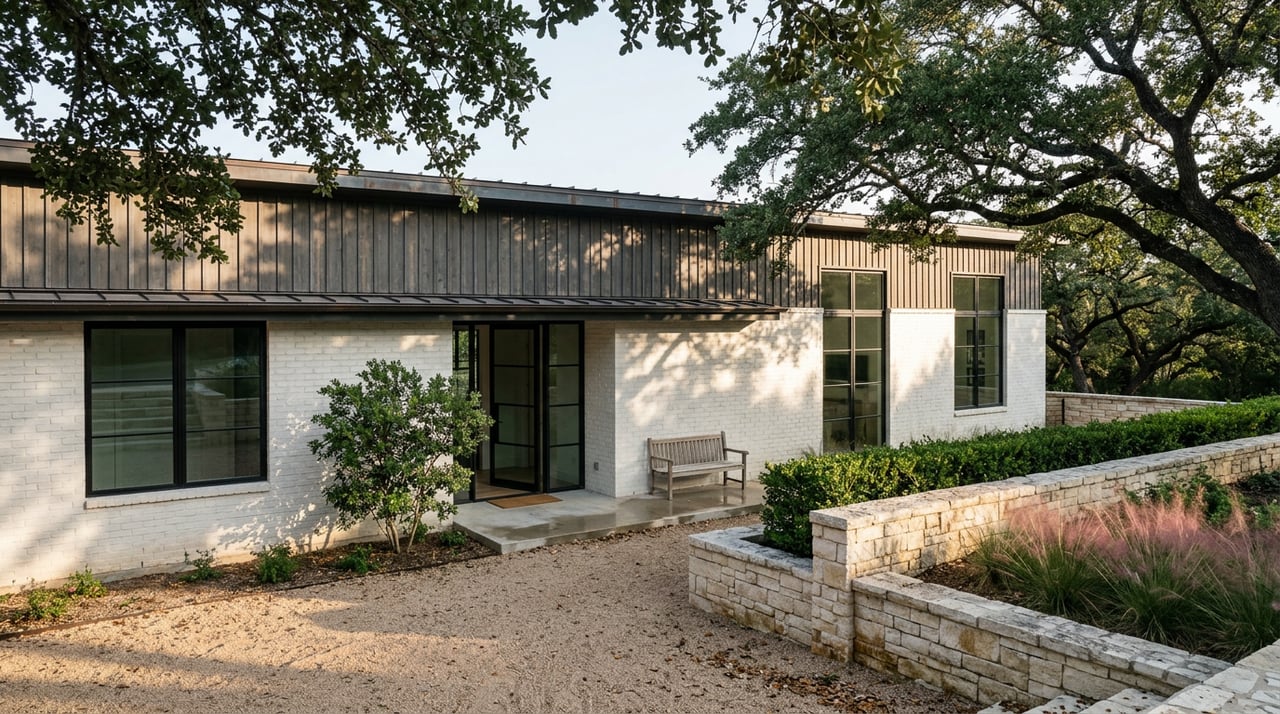
Tour a $1.6 million listing in West Lake Hills and the agent will not spend much time on the kitchen. They will walk you outside. They will point out the canopy, ask whether you have seen the tree survey, and mention, gently, that the house is not really the point. In a city this built out, the standard advice for a buyer at that price point is to value the lot first and the structure second, because most of what closes under $2.5 million is a 1960s or 1970s ranch house that a buyer will either renovate heavily or tear down.
That is the ordinary state of the market. Which is why it was worth noticing when, in late 2025, MileStone Community Builders broke ground on 48 new home sites along Lost Creek Boulevard. New construction at any scale is rare enough in and around West Lake Hills that a single subdivision counts as a market event. And the detail that actually matters is not that it happened. It is where the new houses landed on the price ladder. They did not land at the top. They landed in the middle, and that placement tells you more about how value actually gets built in this city than the median sale price ever will.
The First New Neighborhood in Years Isn't Aimed at the Top of the Market
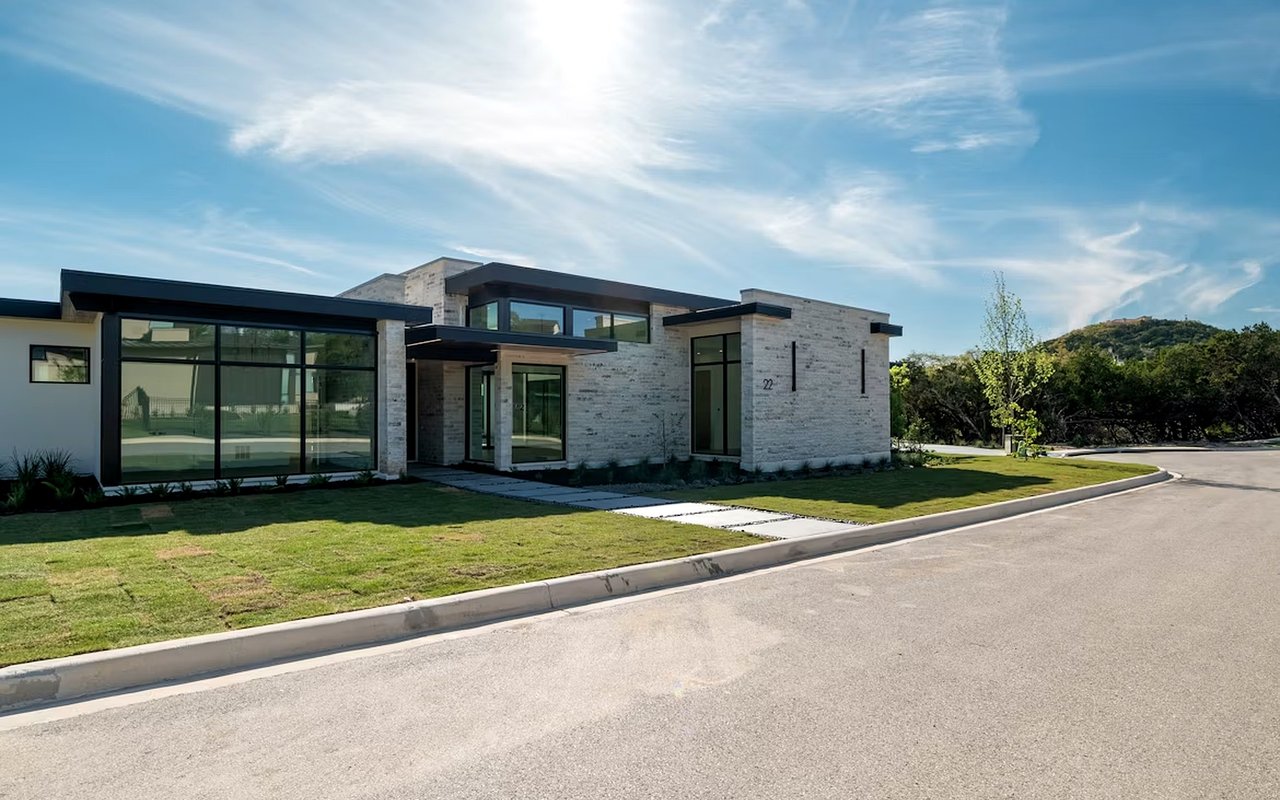
The project is called The Overlook at Westlake, built through M Signature, MileStone's luxury division, on land off Lost Creek Boulevard, inside Austin city limits rather than West Lake Hills. Community Impact covered the groundbreaking in December, reporting 48 home sites, single-family homes ranging from roughly 3,300 to 5,000 square feet, and pricing from $2.85 million to $5 million. MileStone is running an all-inclusive pricing model, meaning a pool or upgraded landscaping can be built into the base contract rather than negotiated as a change order later. Buyers can choose a flatter lot with a view toward Omni Barton Creek Resort, or a lot on the other side of the property angled toward downtown Austin, depending on which outlook they want to pay for.
The infrastructure tells its own story about how land-constrained this pocket of Austin really is. Kimley-Horn, the engineering firm on the project, is building a dedicated $3 million water tower on the property's northeast side just to service the community. That is not a cost a builder absorbs for a handful of houses. It is a cost that only makes sense when usable, developable land in this area is scarce enough that a builder has to solve its own infrastructure rather than tap into existing capacity nearby.
"It's going to be a high-end, luxury type of product," the project's representative, Otis, told Community Impact when the development broke ground.
That quote is worth sitting with, because "high-end" here does not mean the top of the West Lake Hills market. It means the middle of it.
What $2.85 Million to $5 Million Actually Buys Here
Multiple Listing Service data circulating this year puts the 2026 year-to-date median sale price for the broader 78746 ZIP code at roughly $2.39 million, with the median inside West Lake Hills city limits running closer to $2.8 million. Neither number is one price point. It is an average across three genuinely different products that happen to share a ZIP code and a school district.
| Tier | Typical price | What you're actually buying |
|---|---|---|
| Entry | $1.3M – $2.5M | An original 1960s-1990s home on a standard lot, often a renovation or teardown candidate |
| New construction / mid-tier | $2.85M – $5M | Newly built homes like those at The Overlook, on engineered lots with modern systems and no deferred maintenance |
| Custom estate | $5M and up | Architect-designed homes on ridge or lakefront lots, often with pools, guest houses, and unobstructed Hill Country views |
The Overlook's pricing sits almost entirely inside that middle band. That placement is the tell. A builder pricing new inventory in this market is not guessing at what the top of the market will pay. They are pricing against what a buyer would otherwise spend gutting and rebuilding an entry-tier teardown, and betting that a turnkey, engineered new home wins that comparison for a meaningful slice of buyers. In a city with almost no vacant land left to build on, that bet is itself a data point about where real demand actually sits.
Why the Median Is the Wrong Number to Anchor a Decision
Two homes a quarter mile apart in West Lake Hills can differ by millions of dollars based on lot slope, tree cover, and whether the view is permanent or seasonal. That variation is exactly why a single median figure flattens more than it explains, and it is why two other market mechanics matter more than the headline number if you are actually pricing a purchase or a listing here.
The first is the Travis Central Appraisal District's assessed value. TCAD values across Austin routinely lag current market conditions, and West Lake Hills is no exception. An assessed value that looks conservative relative to a comparable sale down the street is not a signal that the seller is overreaching. It is a reminder that the appraisal roll and the resale market operate on different clocks, and neither buyers nor sellers should treat the county's number as a pricing anchor.
The second is a quieter dynamic that shows up in low-turnover luxury markets like this one. A seller who lists a home and does not get an offer they consider fair often does not drop the price. They pull the listing and wait, sometimes moving the property to a private, off-market conversation instead. That behavior does not show up in a published months-of-supply figure, but it means the visible inventory on public portals can understate just how tight the actual market is. If you are shopping by scrolling active listings alone, you are seeing a partial picture of what is actually available.
The Tree Ordinance Is the Document That Actually Underwrites Your Plan
The instinct to buy an older home on a big wooded lot and simply clear it for something new runs into a real constraint here. West Lake Hills has operated its own tree and vegetation ordinance for decades, and it is not a formality. Removing most trees on a property, including many that are dead or in the way of a build, requires a permit from the city, and larger trees carry replacement requirements measured in caliper inches rather than a simple sign-off. The ordinance exists specifically to keep the hillside canopy that gives this city its character, which means the buildable footprint on a given lot is often smaller than the acreage on the listing sheet suggests.
For anyone comparing a teardown candidate to a new-construction option like The Overlook, this is the practical difference. The Overlook sits in Austin, outside this ordinance, and its lots are already engineered. An older lot in West Lake Hills still has to clear that process, and the cost, time, and uncertainty of doing so belongs in your math before you write an offer, not after.
A Few Direct Questions
Is West Lake Hills actually building new houses again, or is this one project a one-off? As of this year, The Overlook at Westlake, which sits in Austin rather than inside West Lake Hills city limits, is the clearest example of new construction at scale in the area, and it exists because a builder found a rare parcel large enough to develop rather than because the broader supply picture has changed. Most of what comes to market inside the city is still an existing home, either as-is or already rebuilt on an older lot.
If I buy an older home with a big lot, can I assume I can clear it and build what I want? Not without checking first. The city's tree ordinance requires a permit for most removal and can require replacement planting for larger trees, and the buildable area on a given lot is often smaller once slope, setbacks, and tree preservation are factored in. Confirm what a lot will actually allow before you price a teardown into your offer.
Should I use the county's assessed value to gauge whether a listing is priced fairly? Treat it as a data point, not a benchmark. Travis Central Appraisal District values in this market tend to run behind current sale prices, so a comparison based on recent closed sales will tell you more than the appraisal roll will.
If you are trying to figure out where a specific West Lake Hills lot or listing actually falls on this ladder, that is exactly the kind of question worth a direct conversation rather than a portal search. Noa Levy and her team work this market street by street, from entry-tier teardown candidates to new construction to ridge-lot estates, and can walk you through what a specific address is really worth before you write an offer. Let's Connect.